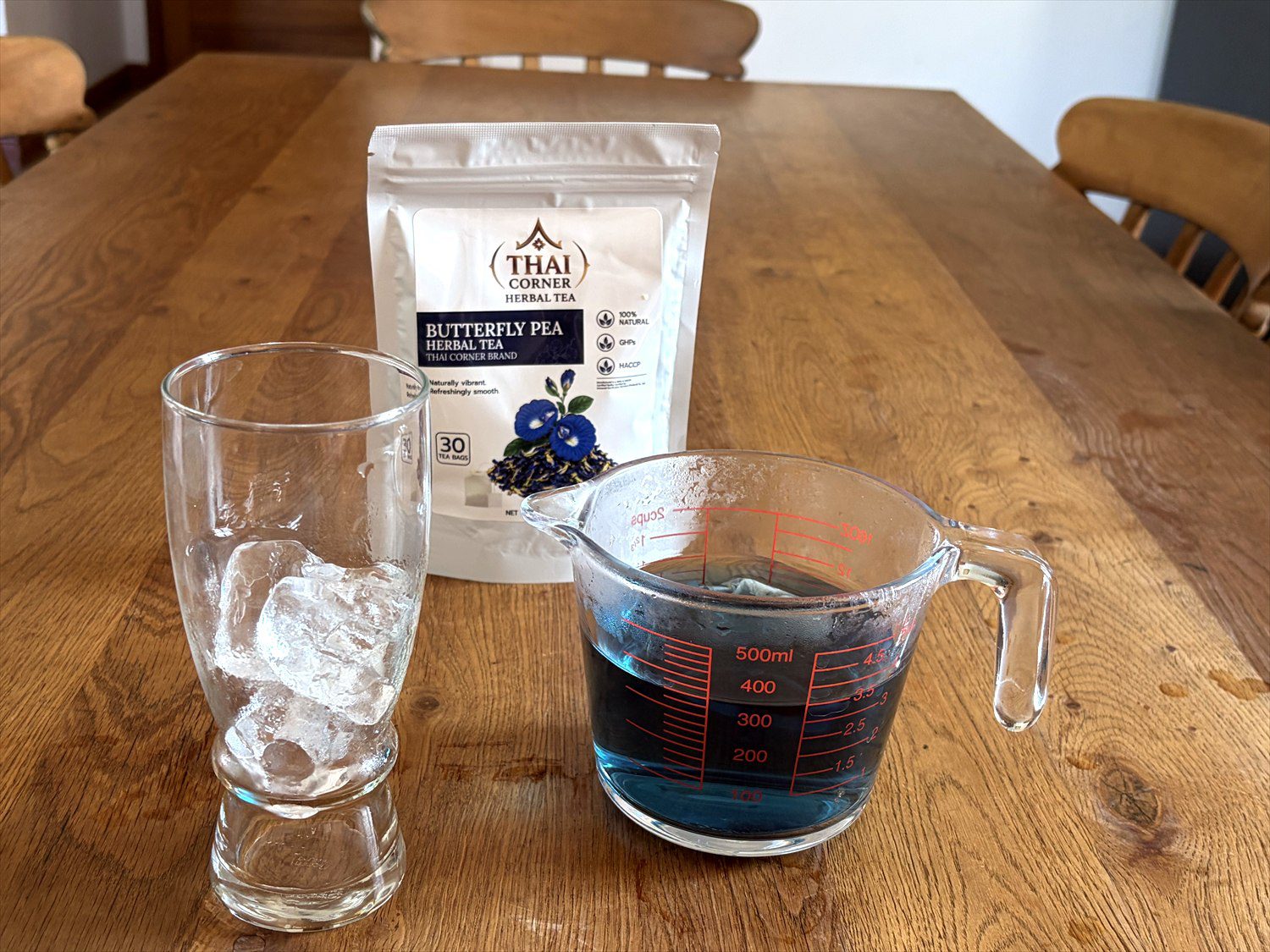
Colour-Changing Tea: How to Turn Butterfly Pea Tea from Blue to Purple to Pink
Pour a squeeze of lemon or lime into a cup of deep-blue butterfly pea tea and watch it swirl to violet, then pink. It looks like a magic trick, but it is simple kitchen science, and you can do it at home in two minutes with one tea bag. This guide shows you how, explains why it happens, and gives you some easy ways to show it off.
What you need
- 1 butterfly pea tea bag
- 250 ml (about 1 cup) of freshly boiled water
- A clear glass or glass mug, so you can see the colours
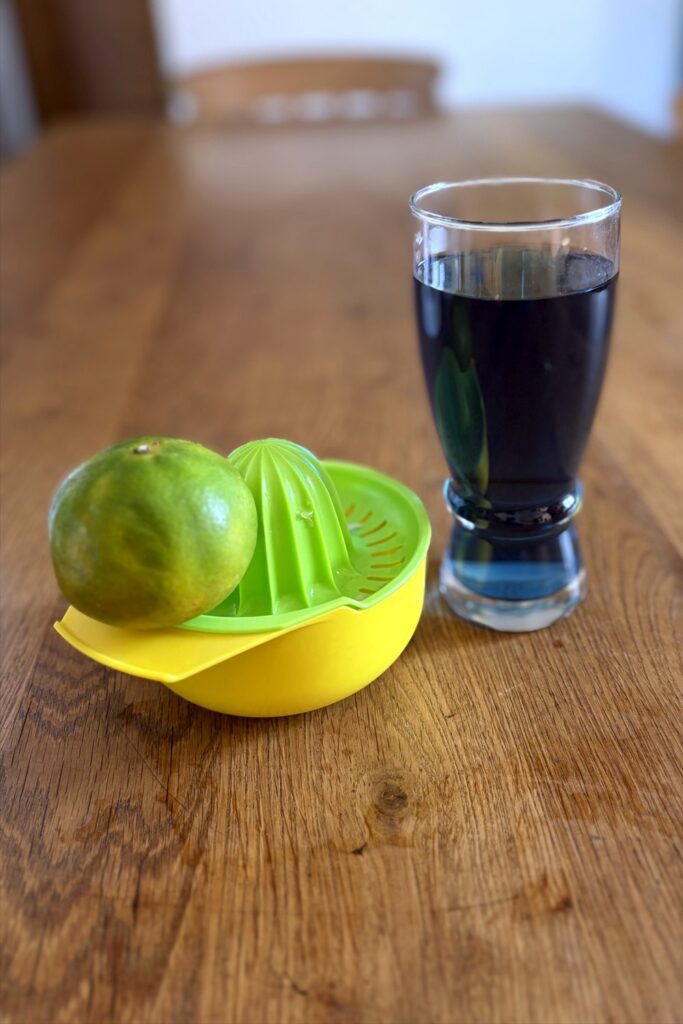
- Half a lemon or lime
- Optional: honey or sugar, ice, a spoon for stirring
Step by step: blue to purple to pink
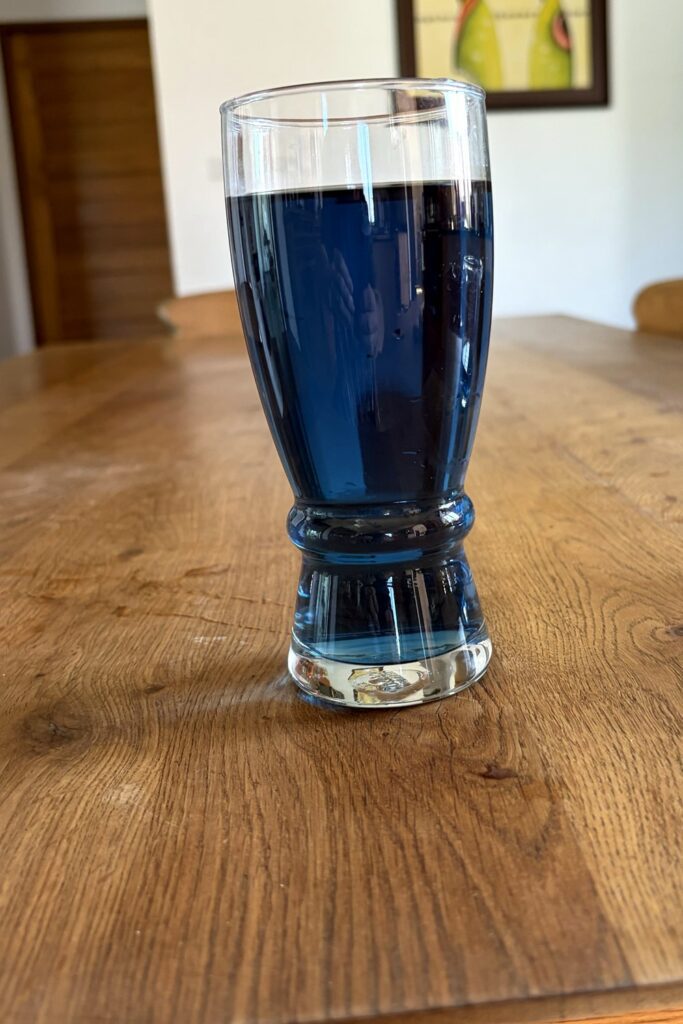
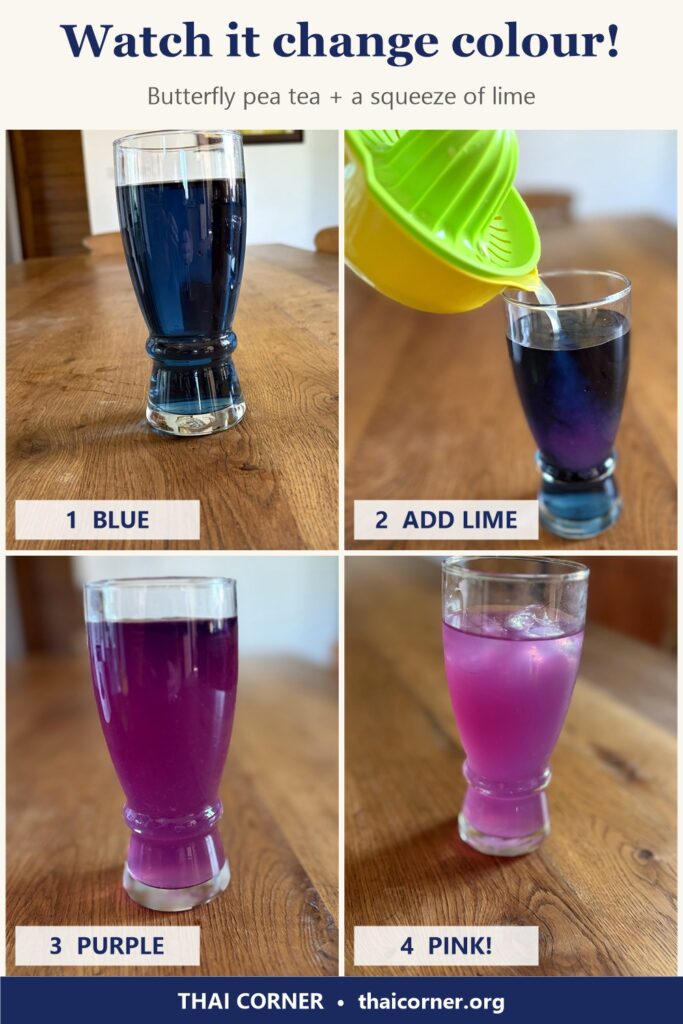
- Brew it blue. Put the tea bag in your glass and pour over the hot water. Steep for 3 to 5 minutes, until the tea is a deep indigo blue, then remove the bag.
- Let it settle. For the most dramatic effect, let the tea stand for a minute so it is still and clear.
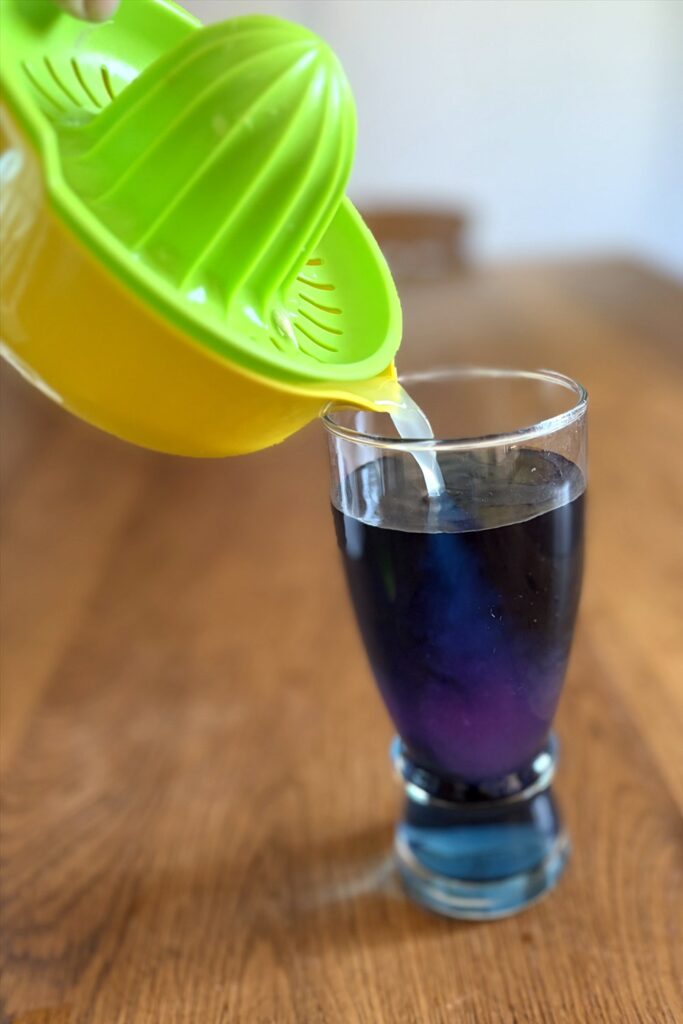
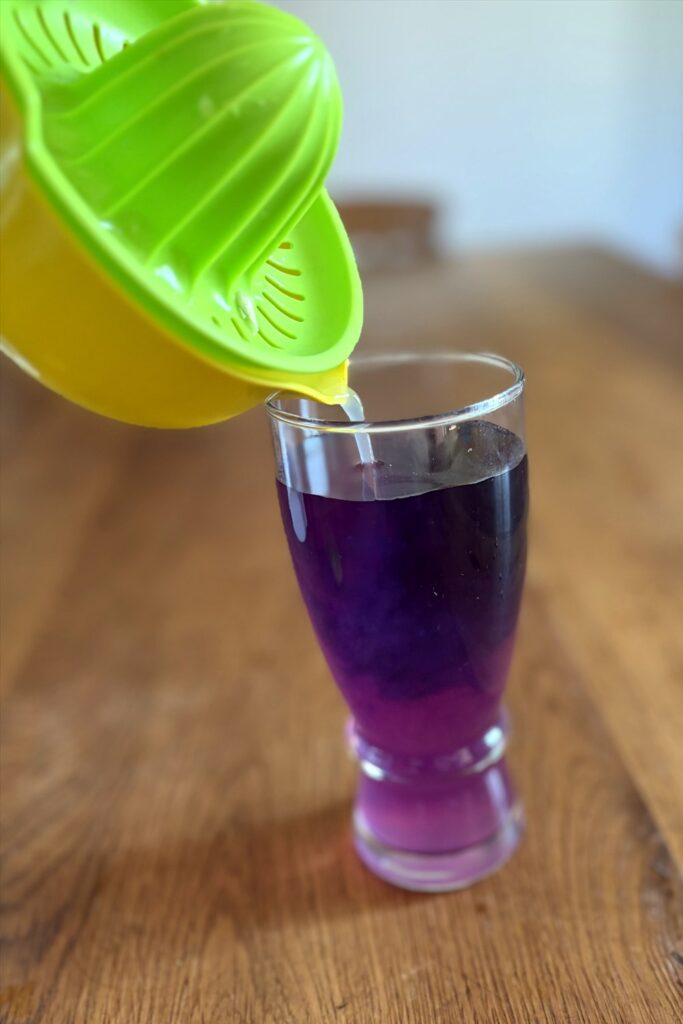
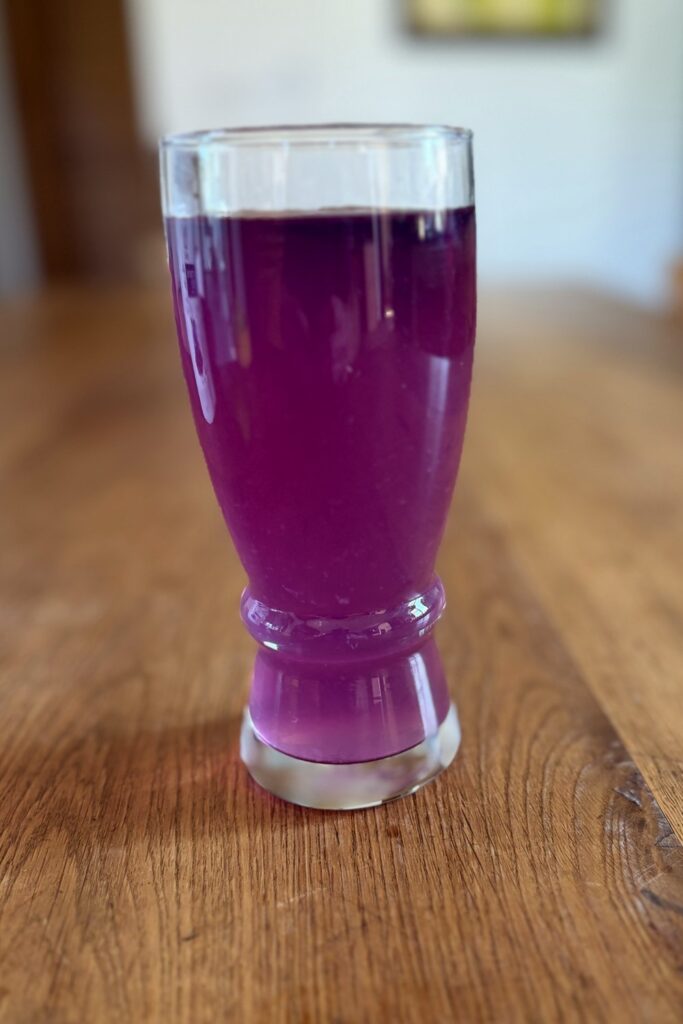
- Add the citrus slowly. Squeeze in a little lemon or lime juice and watch the colour bloom from the top down: blue turns to violet within seconds.
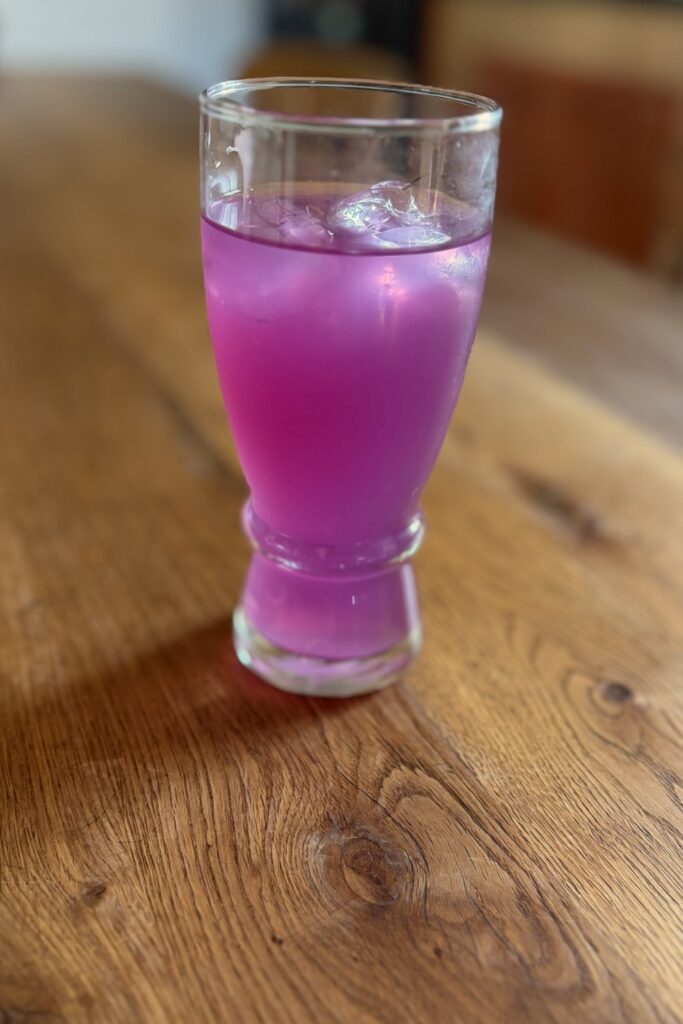
- Keep going. Add more juice and stir. The tea moves from violet towards a rosy purple-pink.
- Sweeten to taste. Butterfly pea tea has a mild, earthy flavour; lemon adds a fresh sharpness, so a little honey or sugar balances it nicely.
Why does it change colour?
The blue comes from natural plant pigments called anthocyanins, the same family of pigments found in red cabbage, blueberries and red grapes. Anthocyanins are natural pH indicators: their colour depends on how acidic or alkaline the liquid around them is.
Plain butterfly pea tea is close to neutral, so it shows blue. Lemon and lime juice are acidic, so adding them shifts the pigment to violet and then pink. Nothing is added to the tea to make this happen; it is simply the flower’s own colour responding to the citrus.
Colour guide: what turns it which colour?
| Add this | Colour you get |
|---|---|
| Nothing (plain tea) | Deep blue |
| A few drops of lemon or lime | Violet |
| A good squeeze of lemon or lime | Purple-pink |
| Lemonade or a splash of passion fruit juice | Purple to pink, depending on amount |
| A little Rosella (hibiscus) tea | Magenta-pink |
| Milk | Soft pastel blue |
Results vary with how strong you brew the tea and how much citrus you add, so experiment and find your favourite shade.
Fun ways to show it off
Layered lemonade
Brew the tea double-strength (two tea bags in 250 ml) and let it cool. Fill a glass with ice and lemonade, then pour the cooled blue tea slowly over the back of a spoon. It floats in a blue layer on top, and turns purple where the two meet. Stir at the table for the full effect.
Blue ice cubes
Freeze cooled butterfly pea tea in an ice-cube tray. Drop the blue cubes into lemonade, tonic water or sparkling water, and the drink slowly changes colour as they melt.
“Make your own colour” party jugs
Serve a jug of chilled blue tea with small jugs of lemon juice, lime juice and lemonade on the side, and let guests mix their own shade. It is a great talking point at a summer party or barbecue.
A kitchen science experiment for kids
Pour cooled tea into three clear glasses. Leave one plain, add a few drops of lemon to the second, and a big squeeze to the third, then ask the children to guess what will happen before each step. An adult should always handle the boiling water; once the tea has cooled, the rest is simple and fun.
Tips for the best colour
- Brew it strong. A longer steep or a second tea bag gives a deeper blue and more dramatic changes.
- Use a clear glass and good light. Daylight against a white background shows the colours best, especially for photos.
- Add citrus last. Keep the tea blue until you are ready to serve, then add the lemon in front of your guests.
- Store it cold. Brewed tea keeps in a covered jug in the fridge for 2 to 3 days.
Frequently asked questions
Does the taste change when the colour changes?
The tea itself tastes the same; what you taste is the lemon or lime you added, which gives a fresh, tangy note. Plain butterfly pea tea is mild and slightly earthy.
Can I change it back to blue?
Not easily once the citrus is in, so if you want to show the trick more than once, keep a jug of plain blue tea aside and pour fresh glasses.
Does it contain caffeine?
No. Butterfly pea flower tea is a herbal infusion made only from dried flowers, so it is naturally caffeine free and can be enjoyed at any time of day.
Where does butterfly pea tea come from?
The flower, Clitoria ternatea, grows widely in Thailand, where it is called dok anchan and has long been used to colour rice, desserts and drinks. You can read more in our guide to butterfly pea flower tea, or try more drinks in Iced Thai Herbal Teas: Four Easy Recipes.
Try it yourself
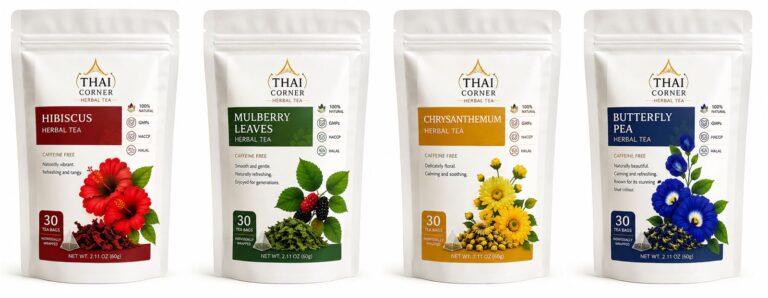
Thai Corner Butterfly Pea tea comes in pouches of 30 tea bags, ready for your own colour-changing experiments. Pair it with our Rosella (hibiscus) tea for even more shades of pink.